The Cascade Effect of the Metallurgical Crisis: Why Production Drops Threaten Ukrainian City Budgets
Production cuts in Ukraine's mining and metals sector trigger a chain reaction leading to tax deficits and job losses at both state and municipal levels.
 🧠AI Analysis
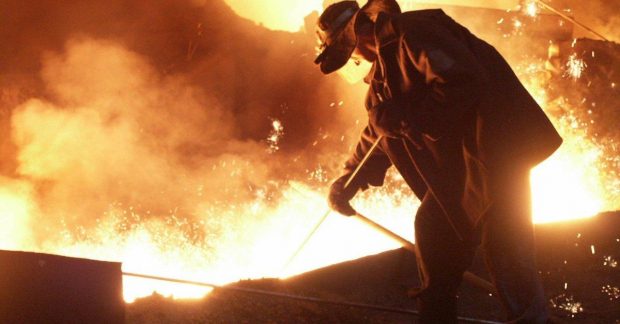
Photo: UNIAN
Key points
- Metallurgical production cuts have caused a sharp drop in tax revenues
- Industrial cities are forced to sequester budgets due to funding shortages
- The crisis has a cascading nature, affecting adjacent industries, energy, and small business
- Stable energy and logistics are critically necessary to preserve the economy
The ongoing crisis in Ukraine's metallurgical industry has ceased to be a localized problem for individual enterprises, turning into a systemic threat to national and local finances. Due to enemy shelling, logistical bottlenecks, and electricity shortages, key market players are forced to reduce output, directly impacting tax revenues. In particular, during the first nine months of the current year, leading companies in the sector recorded a significant drop in payments to budgets at all levels.
A Chain Reaction for the Economy and Communities
The mining and metals complex traditionally serves as one of the primary sources of foreign exchange earnings and domestic product generation. However, every halted enterprise or curtailed production line pulls down related partners: energy providers, machine builders, transport companies, and small businesses. The cascade effect encompasses the entire cooperative network, reducing orders and revenues across the supply chain.
This hits industrial cities and communities the hardest, as their budgets directly depend on personal income taxes and land fees from large plants. Declining revenues force local authorities to review expenditures, freeze infrastructure projects, road repairs, and social sphere financing. This inevitably affects the quality of services in hospitals and educational institutions, as well as cities' capacities to attract international grants.
Labor Market Risks and the Future of the Sector
Beyond financial losses for the treasury, the crisis poses a severe threat to employment. Downsizing at plants leads to a drop in citizens' purchasing power, hurting local retail and services. Experts emphasize that resolving the issue requires comprehensive steps: stable energy supplies, optimization of logistics routes, and the unblocking of export paths to preserve the tax base.
Source UNIAN — unian.ua/society/kaskadniy-efekt-padinnya-virobnictva-u-metalurgiji… ↗
Read next
 ⚽Sport
Police in Kropyvnytskyi Seize Thousands of Drug Packages from Local Resident
Law enforcement officers in Kropyvnytskyi detained a 40-year-old local resident suspected of large-scale drug distribution.
 🛡️Security
Russian missile corvette 'Merkuriy' destroyed in the Mediterranean: What is known about the vessel
Ukraine’s Defense Forces, in cooperation with the Security Service, conducted an operation near the Libyan port of Benghazi, striking and sinking the Russian missile corv…
 ⚽Sport
Anti-Corruption Scandal: Former Prosecutor General Accuses SAP Head's Inner Circle of Corruption
Former Prosecutor General Ruslan Kravchenko stated that the wife of SAP head Oleksandr Klymenko and her acquaintance are trying to avoid accountability for bribery throug…
 ⚽Sport
Evacuation vehicle shelled in Kramatorsk: Two dead
Russian forces hit a marked evacuation vehicle carrying civilians in Kramatorsk, Donetsk region, resulting in two fatalities.
 ⚽Sport
Carlos Alcaraz sets historic prize money record at ATP Finals
Spanish tennis player Carlos Alcaraz earned a record prize money amount at the ATP Finals-2026 in Turin.
 🛡️Security
Delays in Energy Facility Protection: Causes and Challenges Explained
Construction of protective structures for energy facilities faced severe delays due to underfunding, late site transfers, and air raids.