Demographic Paradox: Why Ukraine Officially Records Fewer Deaths During the War
The official decline in the number of deaths in Ukraine is a consequence of the population decrease in controlled territories, rather than an improvement in the demographic situation.
 🧠AI Analysis
Photo: TSN
Key points
- The decline in deaths is linked to a decrease in population size.
- Birth rates in Ukraine have fallen by nearly 40% since 2021.
- The ratio of deaths to births is critically worsening.
- Only a third of refugees, according to experts, are ready to return to Ukraine.
Recent statistical data on the number of deaths in Ukraine, which might at first glance appear positive, mask a deep demographic crisis. According to Oleksandr Hladun, Deputy Director of the Institute for Demography and Social Studies at the National Academy of Sciences of Ukraine, absolute mortality rates are decreasing; however, this is due not to an improvement in the nation's health, but to an objective reduction in the number of people living in territories controlled by Ukraine.
Reasons for the Statistical Shift
Oleksandr Hladun emphasizes that the Ministry of Justice registers civil status acts only within territories where Ukrainian law applies. Due to the occupation of part of the lands and the mass emigration of millions of citizens abroad, the accounting base has narrowed significantly. While 542,000 deaths were registered in 2022, this figure fell to 485,000 in 2025.
At the same time, the birth rate is showing an even steeper decline. In 2025, only 169,000 live births were recorded, compared to 206,000 in 2022. The ratio of deaths to births is worsening: while previously there were 263 deaths for every 100 births, this figure rose to 355 in the first half of 2026.
"The fact is that the number of deaths is gradually decreasing. Why is it decreasing? Because there are fewer people living in the territory controlled by Ukraine," the demographer explains.
The situation is complicated by the fact that a significant portion of Ukrainians who have fled abroad have already adapted to their new environments. According to expert forecasts, only about a third of forced migrants may return home after the end of hostilities, posing complex challenges for the state regarding the future restoration of human capital.
Source TSN — tsn.ua/ukrayina/paradoks-viyny-v-ukrayini-zmenshuyetsia-kilkist-pomerly… ↗
Read next
 💼Economy
A Veteran’s Path to Professional Life: Employment Experience After Severe Injury
The story of a Ukrainian serviceman who lost his sight at the front but managed to return to legal practice thanks to modern technology and support.
 💼Economy
Predator Population Control: Northern Ukraine Begins Culling Foxes and Jackals
Due to a critical surge in wild animal populations and the threat of rabies, controlled hunting has been authorized in the Chernihiv region.
 👥Society
Why Stove Glass Blackens and How to Properly Dry Firewood: Expert Advice
Experts explain how burning unseasoned firewood leads to rapid chimney fouling and soot buildup, while sharing practical tips for proper wood drying.
 🩺Health
How Much Water to Drink Daily for Healthy Blood Pressure: Cardiologists' Advice
Leading cardiologists and vascular specialists explain how hydration affects blood pressure and what daily water intake is considered optimal.
 💼Economy
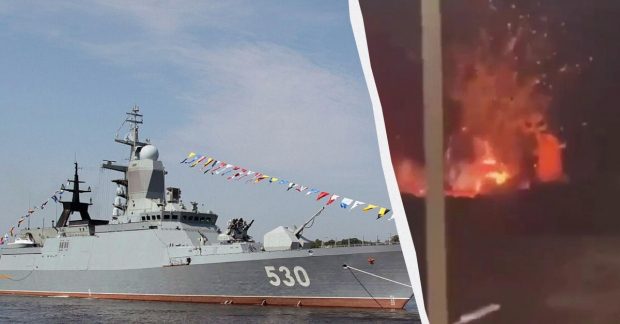
Russian corvette destroyed in Benghazi port: incident details
A Russian Project 20380 corvette, 'Merkuriy', was destroyed by an explosion in the Libyan port of Benghazi while escorting arms shipments.
 🏛️Politics
Clashes at Kyiv-Pechersk Lavra: Conflict Over Decolonization of Religious Sites
A physical altercation broke out at the Kyiv-Pechersk Lavra between activists and UOC parishioners over an attempt to rename a church dedicated to a Russian saint.