NASA Develops Technologies for Permanent Moon Base
The US space agency is working on key engineering solutions that will enable humans to stay on Earth's satellite for extended periods.
 🎓Education
Photo: RBC-Ukraine
Key points
- Using local resources instead of Earth-based supplies
- Deploying small nuclear reactors for power supply
- Protecting infrastructure from radiation and abrasive dust
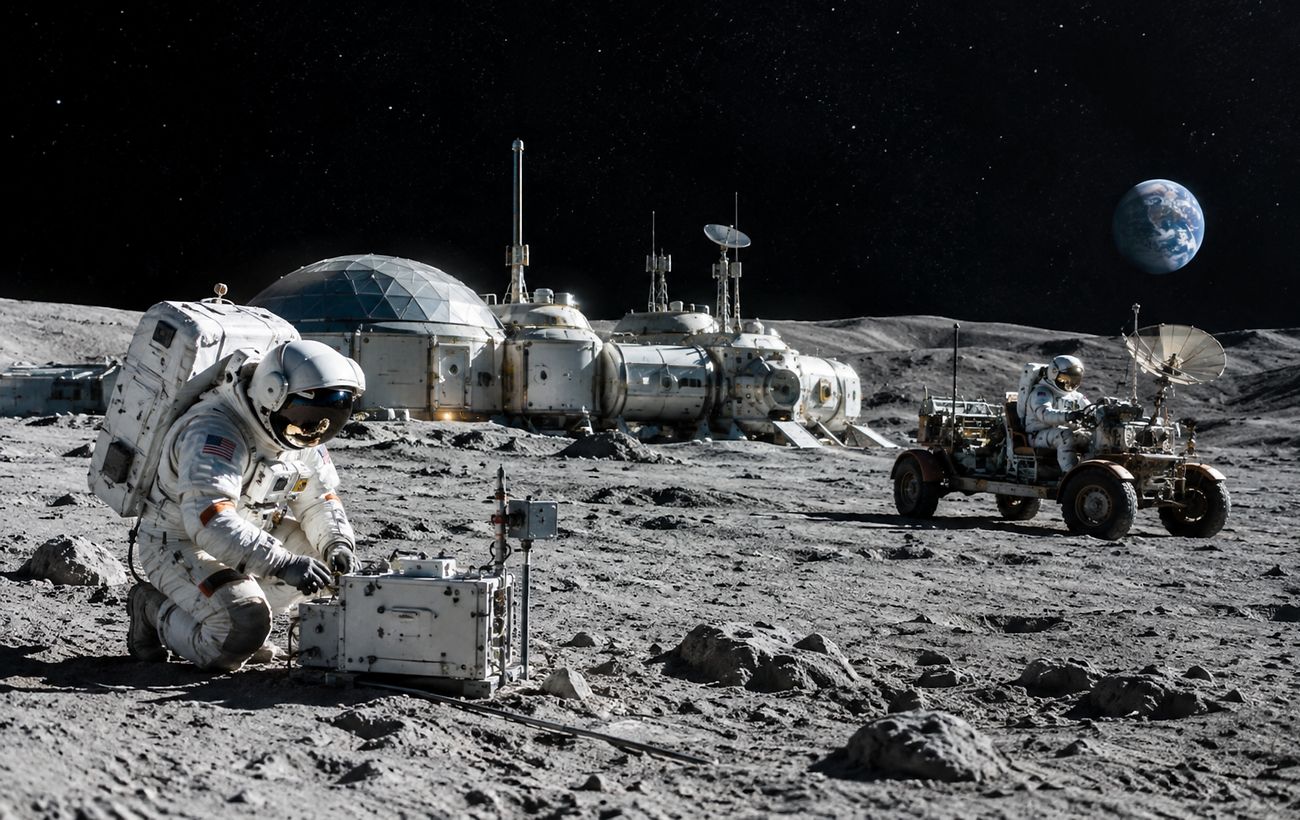
Lunar exploration requires scientists to solve a number of critical challenges, ranging from energy independence to protection from the harsh space environment. NASA is actively developing technologies that will transform short-term visits into a permanent human presence on the lunar surface.
Energy and Local Resources
Since transporting fuel and water from Earth is economically unfeasible, the key approach is the use of In-Situ Resource Utilization (ISRU). Plans include mining ice at the lunar south pole to provide water and oxygen. For stable power supply, in addition to solar panels, the agency is considering the deployment of compact nuclear reactors, the first of which, Lunar Reactor-1, could be delivered by 2030.
Environmental Protection
Beyond energy, radiation and lunar dust remain critical challenges. Because the Moon lacks an atmosphere, living modules are planned to be covered with a layer of regolith for radiation shielding. Simultaneously, electrodynamic dust shields are being developed to clean equipment of abrasive dust, which accumulates static charge and damages machinery.
Source RBC-Ukraine — rbc.ua/ukr/news/vid-dernogo-reaktora-5g-shcho-potribno-nasa-1794836… ↗
Read next
 💼Economy
A Veteran’s Path to Professional Life: Employment Experience After Severe Injury
The story of a Ukrainian serviceman who lost his sight at the front but managed to return to legal practice thanks to modern technology and support.
 💼Economy
Predator Population Control: Northern Ukraine Begins Culling Foxes and Jackals
Due to a critical surge in wild animal populations and the threat of rabies, controlled hunting has been authorized in the Chernihiv region.
 👥Society
Why Stove Glass Blackens and How to Properly Dry Firewood: Expert Advice
Experts explain how burning unseasoned firewood leads to rapid chimney fouling and soot buildup, while sharing practical tips for proper wood drying.
 🩺Health
How Much Water to Drink Daily for Healthy Blood Pressure: Cardiologists' Advice
Leading cardiologists and vascular specialists explain how hydration affects blood pressure and what daily water intake is considered optimal.
 💼Economy
Russian corvette destroyed in Benghazi port: incident details
A Russian Project 20380 corvette, 'Merkuriy', was destroyed by an explosion in the Libyan port of Benghazi while escorting arms shipments.
 🏛️Politics
Clashes at Kyiv-Pechersk Lavra: Conflict Over Decolonization of Religious Sites
A physical altercation broke out at the Kyiv-Pechersk Lavra between activists and UOC parishioners over an attempt to rename a church dedicated to a Russian saint.