Old Calendars Versus Modern Forecasts: What Winter to Expect
An analysis of historical weather predictions from old European calendars compared to modern meteorological forecasts.
 👥Society
Photo: UNIAN
Key points
- Historical weather calendars predicted cold and dry winter conditions.
- Most traditional forecasting rules show very low statistical accuracy.
- Modern meteorology points towards milder and more stable winter trends.
As the winter season approaches, residents of Kropyvnytskyi and regional farmers are increasingly paying attention to weather forecasts and seasonal expectations. Recently, renewed interest has focused on historical meteorological beliefs, specifically an 1851 Hungarian calendar that links yearly weather patterns to planetary cycles.
Historical Predictions Versus Scientific Reality
According to the old compilation, the ongoing Mercury cycle was supposed to bring dry and cold winter months. However, data analysts point out that the vast majority of such traditional rules have a low accuracy rate and often amount to mere coincidence. Modern meteorologists rely on complex atmospheric models and global climate phenomena rather than centuries-old astrological associations.
Furthermore, traditional calendar markers—such as the absence of early frosts in mid-November—tend to suggest that prolonged and severe cold snaps are unlikely. Global meteorological agencies note that ongoing natural climate oscillations generally favor milder and wetter winter conditions across many parts of Europe.
For the local community, this indicates that extreme weather anomalies are not expected to disrupt daily life significantly. While stable temperatures ease the pressure on municipal utility systems, agricultural stakeholders remain focused on soil moisture levels ahead of spring sowing.
Source UNIAN — unian.ua/pogoda/news/zima-2026-2027-chi-bude-vona-holodnoyu-i-suhoy… ↗
Read next
 💼Economy
A Veteran’s Path to Professional Life: Employment Experience After Severe Injury
The story of a Ukrainian serviceman who lost his sight at the front but managed to return to legal practice thanks to modern technology and support.
 💼Economy
Predator Population Control: Northern Ukraine Begins Culling Foxes and Jackals
Due to a critical surge in wild animal populations and the threat of rabies, controlled hunting has been authorized in the Chernihiv region.
 🩺Health
How Much Water to Drink Daily for Healthy Blood Pressure: Cardiologists' Advice
Leading cardiologists and vascular specialists explain how hydration affects blood pressure and what daily water intake is considered optimal.
 💼Economy
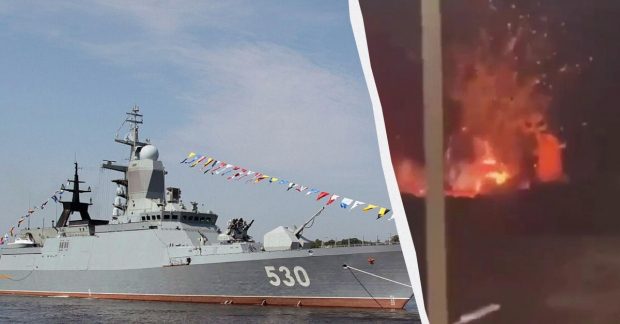
Russian corvette destroyed in Benghazi port: incident details
A Russian Project 20380 corvette, 'Merkuriy', was destroyed by an explosion in the Libyan port of Benghazi while escorting arms shipments.
 🏛️Politics
Clashes at Kyiv-Pechersk Lavra: Conflict Over Decolonization of Religious Sites
A physical altercation broke out at the Kyiv-Pechersk Lavra between activists and UOC parishioners over an attempt to rename a church dedicated to a Russian saint.
 🇺🇦Ukraine
Western Media: Russia Open to NATO-Style Security Guarantees for Ukraine Under Certain Conditions
According to Western media reports, Russian leadership is reportedly discussing NATO Article 5-style security guarantees for Ukraine, provided no Alliance troops are stat…