Swedish Pilot Unable to Down Russian Missile Over Poland Due to Weather: Incident Details
During a massive strike on Ukraine, a Swedish Gripen pilot was authorized to shoot down a Russian missile in Polish airspace but failed to identify the target due to poor visibility.
 🇺🇦Ukraine
Photo: Ukrainska Pravda
Key points
- A Swedish Gripen pilot was authorized by NATO to engage a Russian Kh-101 missile over Poland.
- The interception failed because the pilot could not identify the target through heavy clouds and fog.
- Poland utilized Ukraine's 'Virage' monitoring system to track the incoming Russian threats.
During last Friday's large-scale Russian assault on Ukraine, Polish airspace was breached by several aerial targets. In response, a multinational air patrol was scrambled, including Polish F-16s and Swedish Gripen fighters. One Swedish pilot, while on combat duty, received direct authorization to engage a target that had crossed the border, but the mission could not be completed due to severe weather conditions.
Command Structure and Technical Hurdles
The Swedish fighters operated under the command of NATO's Combined Air Operations Centre (CAOC) in Uedem, Germany. The CAOC issued a 'condition-based order,' granting pilots the autonomy to decide on engaging threats. General Ireneusz Nowak, Operational Commander of the Polish Armed Forces, confirmed that the pilot attempted to intercept what was believed to be a Kh-101 cruise missile.
Despite advanced onboard equipment, the Swedish crew could not confirm the target visually or via optoelectronic systems. The obstacle was described as 'extremely difficult atmospheric conditions' in the interception zone. NATO safety protocols strictly prohibit the use of weapons without positive identification to prevent accidental strikes on civilian or friendly aircraft.
Scale of the Threat and Cooperation with Ukraine
Polish military forces tracked a total of 11 objects potentially threatening the country's security. Three of them crossed the border, though no casualties were reported. The operation involved significant Alliance assets, including a Saab 340 early warning aircraft and a Dutch MRTT tanker. A crucial element of the response was real-time data sharing with Ukraine.
- Poland monitored missile trajectories using data from the Ukrainian 'Virage' system.
- Military officials were aware of launch sites and the number of Kalibr and Kh-101 missiles in advance.
- The attack occurred in two phases: first jet-powered drones, followed by cruise missiles.
General Nowak emphasized that there is no doubt regarding the origin of the attack. Debris from unidentified objects was later discovered in three locations across the Lublin and Podkarpackie provinces. This incident highlights the growing interconnectedness of NATO's border security and the ongoing conflict in Ukraine.
Source Ukrainska Pravda — pravda.com.ua/news/2026/11/21/8063930/ ↗
Read next
 💼Economy
A Veteran’s Path to Professional Life: Employment Experience After Severe Injury
The story of a Ukrainian serviceman who lost his sight at the front but managed to return to legal practice thanks to modern technology and support.
 💼Economy
Predator Population Control: Northern Ukraine Begins Culling Foxes and Jackals
Due to a critical surge in wild animal populations and the threat of rabies, controlled hunting has been authorized in the Chernihiv region.
 👥Society
Why Stove Glass Blackens and How to Properly Dry Firewood: Expert Advice
Experts explain how burning unseasoned firewood leads to rapid chimney fouling and soot buildup, while sharing practical tips for proper wood drying.
 🩺Health
How Much Water to Drink Daily for Healthy Blood Pressure: Cardiologists' Advice
Leading cardiologists and vascular specialists explain how hydration affects blood pressure and what daily water intake is considered optimal.
 💼Economy
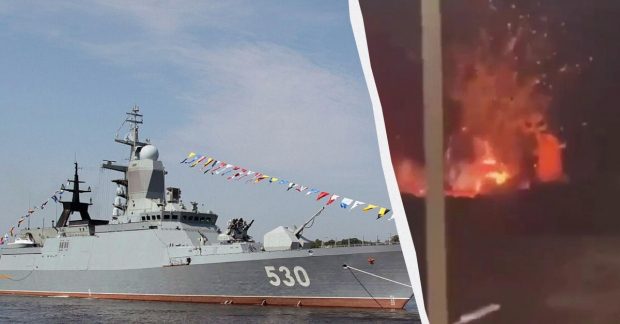
Russian corvette destroyed in Benghazi port: incident details
A Russian Project 20380 corvette, 'Merkuriy', was destroyed by an explosion in the Libyan port of Benghazi while escorting arms shipments.
 🏛️Politics
Clashes at Kyiv-Pechersk Lavra: Conflict Over Decolonization of Religious Sites
A physical altercation broke out at the Kyiv-Pechersk Lavra between activists and UOC parishioners over an attempt to rename a church dedicated to a Russian saint.